1. INTRODUCTION
In reality, every restoration of a historic car involves a lengthy set of choices. Some are little, like the kind of bolt to use, while others have a big impact on the project’s final result. A satisfactory restoration is frequently distinguished from one that becomes frustrating and costly by making these decisions carefully rather than hastily. A small amount of planning now saves a ton of labour later.
Planning a classic car restoration requires balancing the vehicle’s original character with the owner’s goals for how it will eventually be used. Before beginning major work, it helps to consider the desired level of authenticity, available budget, personal skills, and the condition of the car. These factors can guide important decisions about which components should remain original, which may need replacement, and where professional assistance could make the project more practical.
2. CHOOSING THE LEVEL OF RESTORATION
The first important choice is how far you want to travel. The goal of a driver-quality restoration is to make the vehicle dependable and attractive. Near perfection in every detail is the goal of a show-quality construction. Be truthful about how you really intend to use the car because the second alternative is far more expensive and takes a lot longer. You don’t need perfect paint underneath the floor of a car you want to drive on the weekends.
3. DOING THE WORK YOURSELF OR HIRING HELP
While some owners choose to hire experts for challenging tasks, others prefer to handle every step themselves. The majority of folks fall somewhere in the middle. Think about your abilities, your time, and your resources. By preventing expensive errors, delegating complicated tasks like bodywork or engine machining might actually result in cost savings. Additionally, it keeps the project going even when you have a busy schedule. In this activity, being aware of your own limitations is a strength rather than a weakness.
4. SELECTING PAINT AND COLOUR
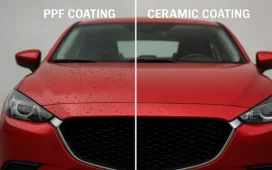
Paint has a significant impact on value and appearance. Collectors typically find it more appealing to stick with the original factory color, although a custom tint personalizes the vehicle. Remember that paint is one of the most costly single components of a repair, therefore it’s not inexpensive to change your mind afterward. It is always worth the extra effort to look at actual examples in daylight before committing.
5. ORIGINAL PARTS VERSUS MODERN UPGRADES
Many restorers have to choose between fitting contemporary replacements or retaining the original mechanical parts. Reliability and safety are greatly increased by modern brakes, cooling systems, and electronic ignition. Purists may disagree, but practical improvements frequently make driving the car much more pleasurable and less stressful if you plan to do so on a regular basis. In order to return the vehicle to stock at a later time, many owners store the original parts.
6. KNOWING WHEN THE PROJECT IS FINISHED
It is remarkably simple to pursue minor flaws indefinitely. You must eventually determine that the car is finished and begin to appreciate it. Instead of continuously revising elements that no one else will ever notice, you may identify that moment by establishing a clear finishing standard at the outset. After all, the goal of the project is to enjoy the completed vehicle.
7. CONCLUSION
During a restoration, the choices you make are just as important as the actual labour. The outcome will be shaped by selecting a reasonable standard, striking a balance between individual work and expert assistance, carefully considering paint and parts, and knowing when to give up. Careful planning transforms a difficult project into one that is very fulfilling. Smaller questions usually have their own answers, so take your time with the bigger ones.