If you’ve ever ridden an electric scooter (e-scooter), you know that the ride quality can be significantly affected by the surface you’re traveling on. Whether you’re gliding down a smooth path or navigating bumpy streets, the suspension system plays a key role in making your ride comfortable and safe. This guide will break down what suspension is, why it’s important in electric scooters, and explore the different types of suspension electric scooters which are available to help you enjoy a smoother ride.
What Is Suspension?
Suspension refers to the system that connects a vehicle’s body to its wheels, consisting of springs, shock absorbers, and linkages. Its main job is to absorb the impact from bumps and uneven surfaces, ensuring a comfortable ride for the rider. In vehicles, including electric scooters, suspension helps to smooth out the ride, improving both comfort and control.
Why Is Suspension Important in Electric Scooters?
Suspension is especially important in electric scooters for several reasons:
1. Comfort: Without proper suspension, the vibrations from rough surfaces can make for a bumpy, uncomfortable ride. This can lead to fatigue and discomfort, especially on longer rides.
2. Safety: A good suspension system helps maintain stability, allowing you to keep better control of the scooter. Without suspension, shocks from bumpy terrain can throw you off balance, increasing the risk of accidents.
3. Performance: Suspension plays a crucial role in how the scooter performs, especially on uneven or rough terrain. With a well-designed suspension system, your scooter will be able to absorb shocks more efficiently, resulting in better handling and stability.
Types of Suspension Systems Used in Electric Scooters
There are several different types of suspension systems, each offering unique advantages. Here’s a look at the most common suspension types used in electric scooters:
A. Spring Suspension
Spring suspension is one of the most common and affordable types of suspension. It uses coiled springs to absorb the shock from bumps and rough surfaces. Spring suspensions are simple in design, easy to maintain, and cost-effective, making them a popular choice for budget-friendly scooters. However, they may not perform as well on very bumpy or uneven terrain. They also tend to lack adjustability, which means riders can’t fine-tune the suspension to suit their preferences or specific conditions.
B. Hydraulic Suspension
Hydraulic suspension systems use fluid to dampen shocks and vibrations. These suspensions are known for their ability to absorb impacts effectively, providing a smoother ride. Hydraulic systems are more advanced than spring suspension, offering customizable settings like compression, rebound, and preload to adjust the ride’s comfort. While they’re often used in premium electric scooters, hydraulic suspensions do require more maintenance and can be more expensive. For example, the KuKirin G2 Master All-Terrain Electric Scooter is equipped with hydraulic suspension, allowing for a high level of customization and improved ride quality.
C. Air Suspension
Air suspension uses compressed air to adjust the height of the scooter and absorb shocks. This type of suspension is valued for its customizable settings, allowing riders to adjust the ride height and cushioning. Air suspensions are lightweight, but they can be more complicated to maintain and may be prone to air leaks over time. Due to the design of most e-scooters, air suspension systems are rarely used, as they often don’t fit well with the scooter’s frame and can be less effective on smaller models.
D. Rubber Suspension
Rubber suspension uses flexible rubber components to absorb shocks and vibrations. Often referred to as elastomeric suspension, this type is common in smaller scooters and bicycles. Rubber suspensions are inexpensive, low-maintenance, and lightweight, making them an excellent option for urban commuting. However, they may not offer as much customization or adjustment as other suspension types, and they may struggle to absorb large shocks compared to hydraulic or air suspensions.
E. Swingarm Suspension
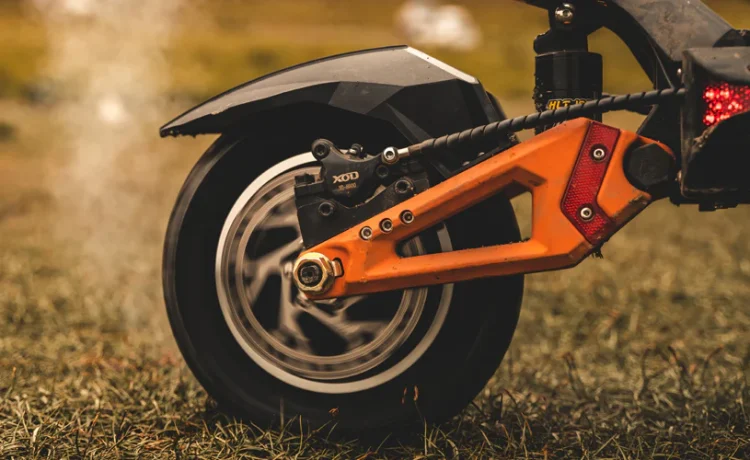
Swingarm suspension uses a swingarm, a pivoting arm attached to the rear wheel. This system allows the rear wheel to move vertically, which helps absorb shocks and maintain better traction. Swingarm suspension is popular in more powerful scooters because it offers stability and smoothness. For example, the KuKerin G3 Pro Electric Scooter features dual swingarms combined with spring suspension, making it a high-performance option for riders looking for a robust suspension system.
F. Dual Suspension
Dual suspension combines suspension systems on both the front and rear wheels of the scooter, offering comprehensive shock absorption. This combination results in a much smoother ride, especially on uneven terrain. Dual suspension systems are ideal for riders who want the best in comfort and stability, though they can add extra weight to the scooter and increase its price due to the complexity of having two suspension systems. However, for those who frequently ride on rough terrain or take longer trips, dual suspension provides an excellent ride quality.
How to Adjust Your E-Scooter Suspension for the Best Ride
Adjusting your e-scooter’s suspension is essential to getting the best performance out of your ride. Most suspension systems allow you to make changes such as adjusting the preload, compression, and rebound. These adjustments control how soft or firm the suspension is, which can affect your comfort and how well your scooter handles on different surfaces.
For example:
- Preload controls how much the suspension compresses under the rider’s weight.
- Compression adjusts how quickly the suspension absorbs shocks.
- Rebound determines how quickly the suspension returns to its original position after compression.
By experimenting with these settings, you can find the perfect balance between comfort and performance, especially if you ride on different types of terrain.
Suspension Maintenance
Proper maintenance of your suspension system is crucial to ensure a long-lasting and effective ride. Regularly check the condition of the springs, shock absorbers, and any rubber or hydraulic components for signs of wear and tear. Lubricate moving parts as needed, and follow the manufacturer’s recommended maintenance schedule to keep everything in working order.
Conclusion
The suspension system is one of the most important aspects of your electric scooter, significantly affecting the comfort, safety, and performance of your ride. Whether you’re using a simple spring suspension or a more advanced hydraulic or dual suspension system, a well-maintained suspension ensures a smoother, more enjoyable ride, whether you’re cruising through the city or exploring rougher terrains. By understanding the different types of suspension and adjusting them to fit your needs, you can unlock the full potential of your electric scooter and enjoy the ride to the fullest.